Silver ring workshop
A sterling silver ring in two hours: you mark and saw the strip, shape it on a mandrel, file it, pick a texture and a polish, and the tutor solders the join.
See dates for this ring ↗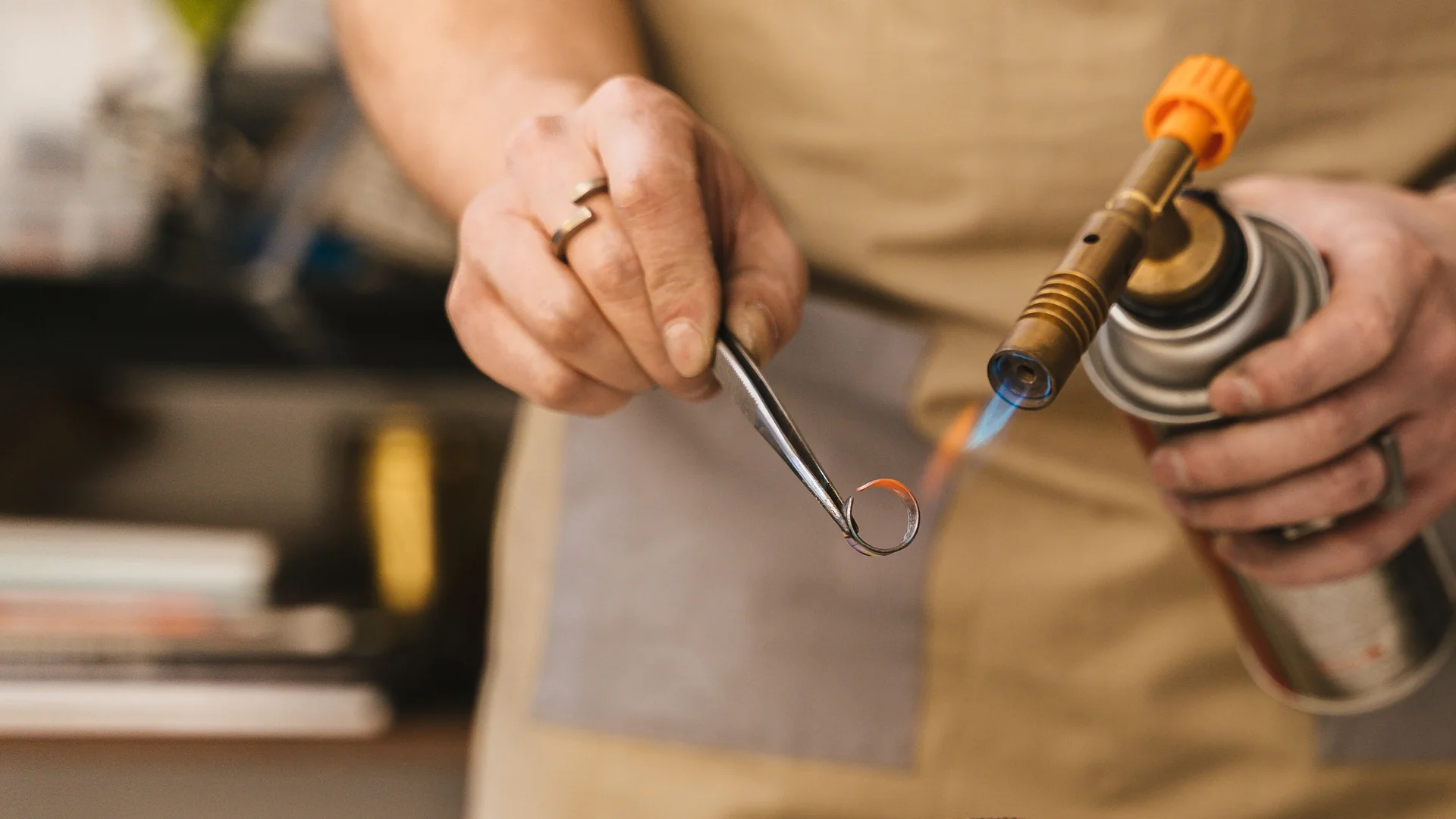
Silver ring workshop · Dublin 2
Saw, hammer, file and polish a sterling silver ring in a small Dublin studio, with a tutor at your elbow.
A strip of silver, a mallet and a tutor beside you, and by the end a ring cut to the finger you chose.
Silver and Dublin in four numbers
From strip to ring
How the silver ring workshop runs at the bench, in the order the work happens.
One stage is a watching stage: the tutor solders the seam of your ring while you look on. Everything else, from the saw to the polish, is yours.
You climb steep stairs to a compact studio on Drury Street or Georges Street, depending on the option you booked, and settle in about ten minutes before the start.
You choose which finger the ring is for, mark the silver to the length it needs and cut it to size with a handsaw.
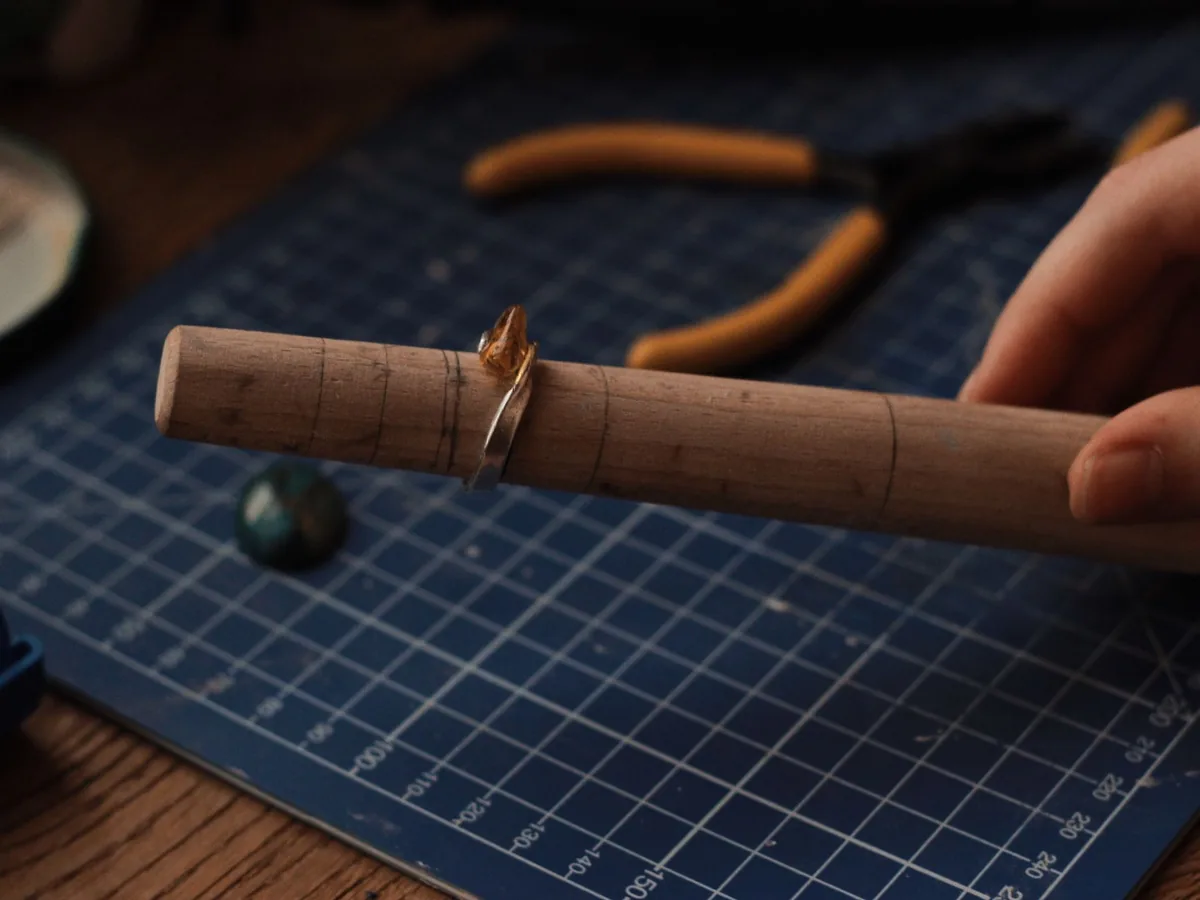
The strip curves into a C and then closes into a round ring as you tap it into shape with a mallet around the mandrel.
Your tutor solders the join while you watch and ask questions. It is the one step done for you, and it turns a bent strip into a closed band.
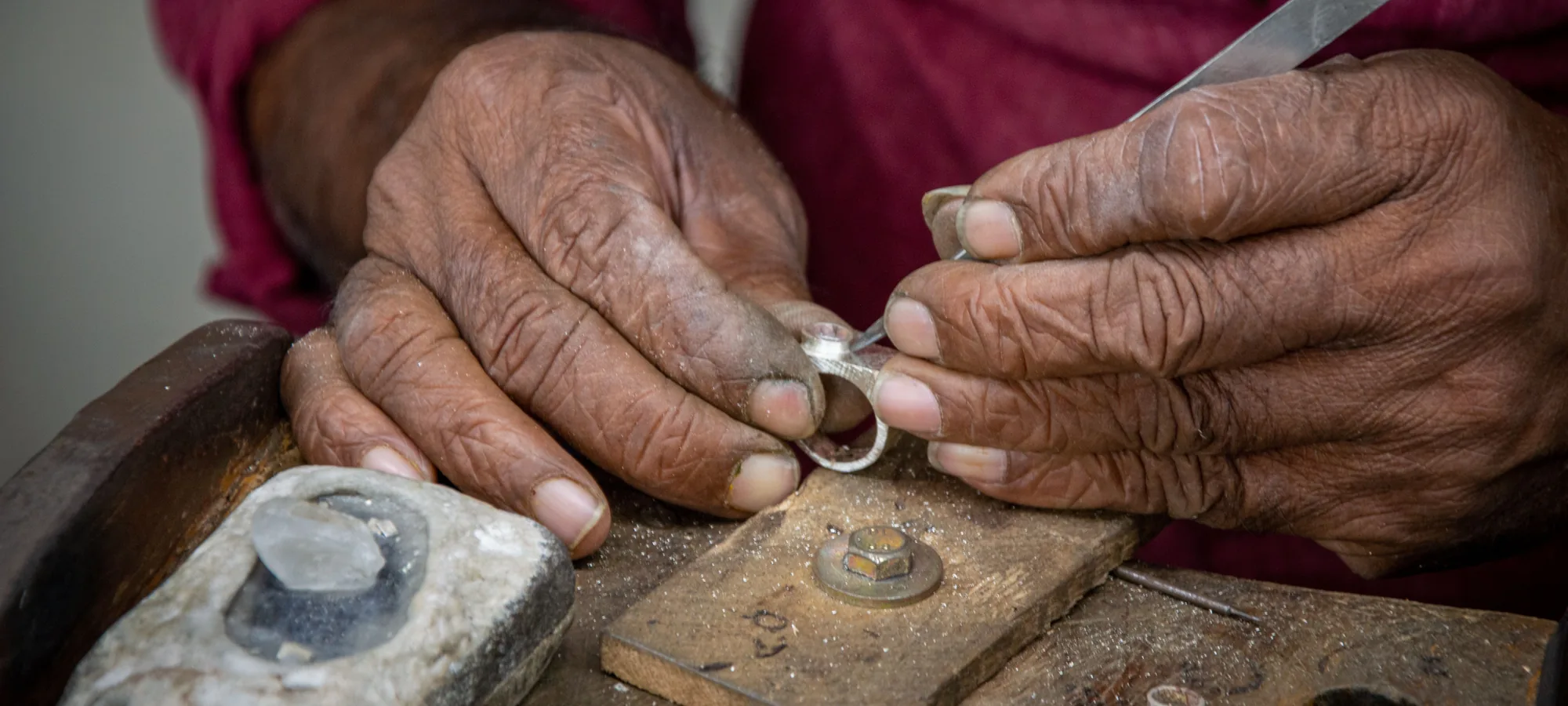
Hand files smooth the seam and give the ring the curve you want. You then pick one of three textures and work it in with a planishing hammer.
You choose a polish, the tutor finishes it, and the ring that began as a flat strip is ready to wear home.
The craft
A silversmith saws silver to shape and hammers it over anvils and stakes at room temperature. Each blow and bend work-hardens the metal, so makers anneal it with heat now and then to soften it again. The jeweller’s saw, the files and the planishing hammer are all on a silversmith’s standard tool list, and they are the tools you pick up in this class.
Sterling silver is an alloy of 92.5% silver by weight with the remainder usually copper, a standard with a minimum fineness of 925. Both workshops here end with a sterling silver ring.
A Claddagh ring combines a heart for love, a crown for loyalty and two clasped hands for friendship. It belongs to the small fishing village of Claddagh in Galway, which has produced the rings continuously since at least 1700, and the oldest surviving examples are credited to Bartholomew Fallon.
By one popular custom the ring says something about the wearer. On the right hand, a heart pointing out means single and pointing in means in a relationship; on the left hand, pointing out means engaged and pointing in means married.
Around the studios
Two small rooms in the middle of Dublin, both reached by steep stairs.
One studio is on Drury Street, a narrow and partly pedestrianised retail street in the centre of the city.
The Claddagh workshop meets at 4 South Great George’s Street, Dublin 2, and the silver ring class has a Georges Street option too.
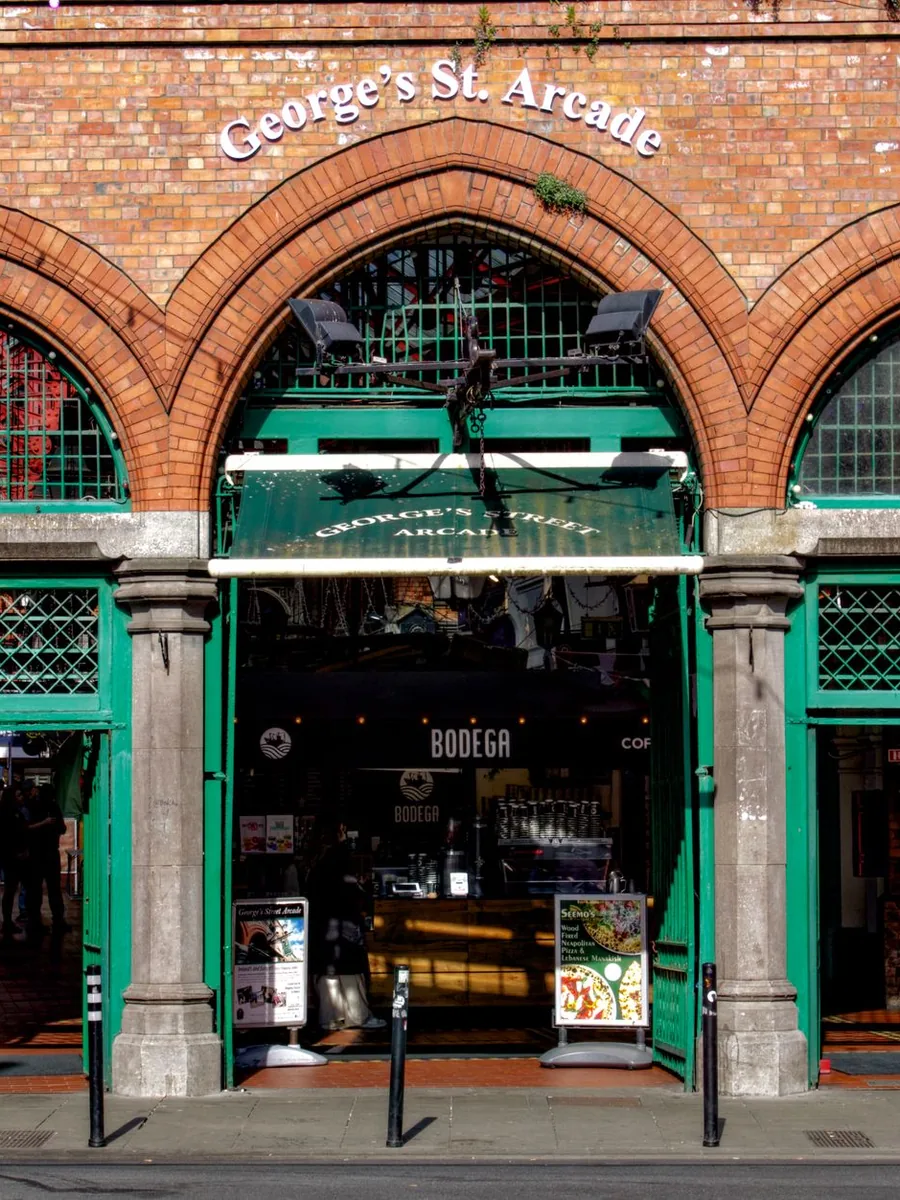
A Victorian red-brick indoor market of stalls and shops stands on South Great George’s Street. It opened in 1881 as the South City Markets.
Both studios have steep stairs, so the classes are not suitable for wheelchair users or for people with impaired mobility.
The studios are small and have no space to keep luggage, so travel light on the day.
Dublin is Ireland’s capital and largest city, on Dublin Bay at the mouth of the River Liffey.
At the bench and in the city
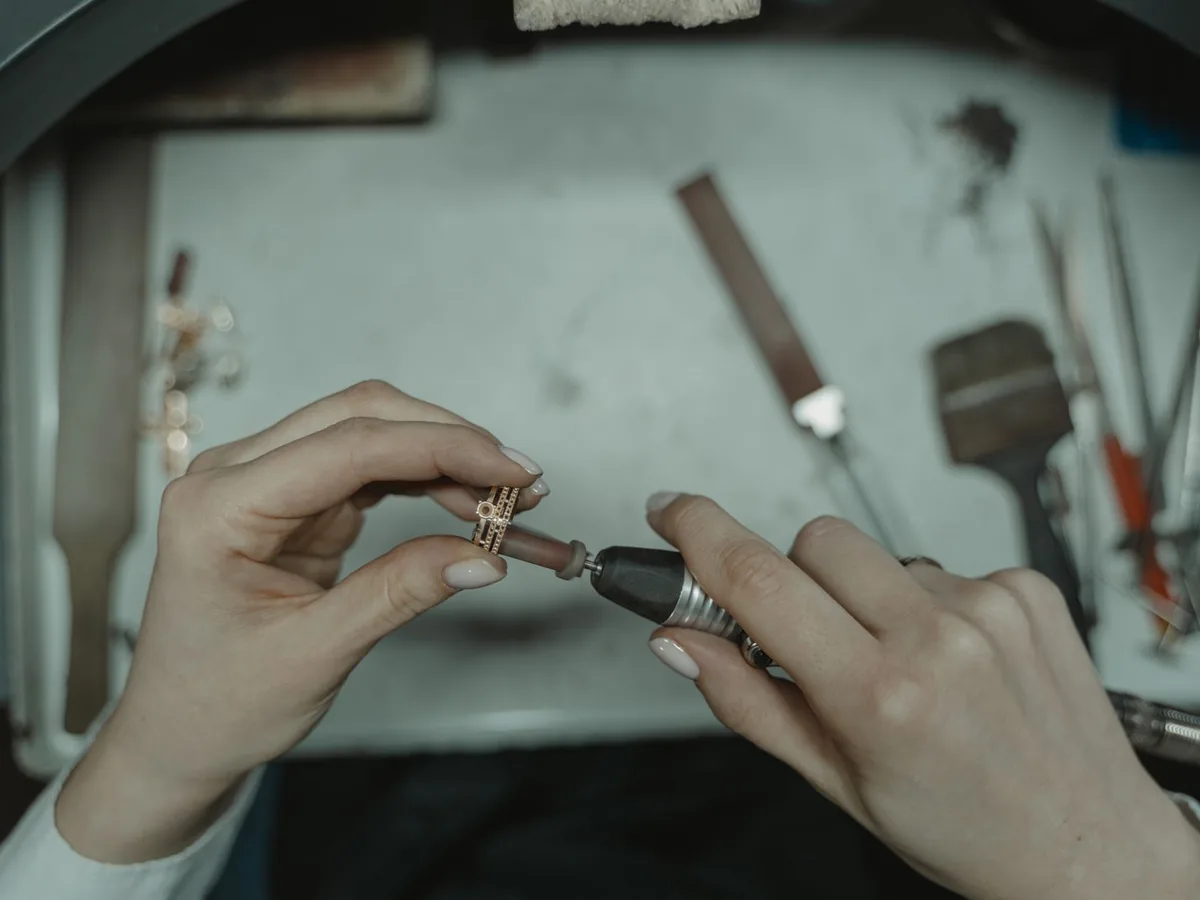
Representative photographs of ring-making benches and the city around the studios.

Which ring
| Option | What you make | Who it suits |
|---|---|---|
| Silver ring workshop | A sterling silver ring in two hours: you mark and saw the strip, shape it on a mandrel, file it, pick a texture and a polish, and the tutor solders the join. | Anyone who wants a plain, personal ring and the pleasure of choosing its curve and finish. |
| Claddagh ring workshop | A made-to-measure sterling silver Claddagh ring in two hours, built from a Claddagh ring strip with a scribe, a jeweller’s saw, pliers and a ring mandrel, with aprons and all tools provided. | Couples, friends and families who want the Irish heart, crown and hands design. |
| Second studio, Georges Street | The same silver ring class held at a Georges Street studio, offered as a separate option when Drury Street has no date you like. | Travellers whose dates are tight and who want more choice of days. |
Prefer the Claddagh design? See the Claddagh ring workshop ↗
Two rings to make
The silver ring workshop and the Claddagh ring workshop are both taught by Silver Works in its Dublin 2 studios. Pick one and GetYourGuide opens on that workshop; further down are other things to do while you are in the city.
A sterling silver ring in two hours: you mark and saw the strip, shape it on a mandrel, file it, pick a texture and a polish, and the tutor solders the join.
See dates for this ring ↗A made-to-measure sterling silver Claddagh ring in two hours, built from a Claddagh ring strip with a scribe, a jeweller’s saw, pliers and a ring mandrel, with aprons and all tools provided.
See dates for this ring ↗More to do around Dublin
Practical notes
Your meeting point depends on the option you pick when you book, Drury Street or Georges Street for the silver ring and South Great George’s Street for the Claddagh ring, so check the studio before you set off.
Arrive ten minutes before the class starts. Anyone who turns up more than ten minutes after the start cannot join, and the start times on offer for your date are listed once you check availability.
Leave generous time if you are heading to the studio straight off a flight, because transfers are not offered for late flights.
The class is not for children under 10, anyone under 16 needs a paying guardian with them, and a good level of English is required because the tutor teaches in English.
Both studios have steep stairs and are not suitable for people with impaired mobility or for wheelchair users.
You mark, saw, shape, file, texture and polish your ring. The tutor does the soldering while you watch, and two hours covers the lot.
Notes from a Dublin jewellery designer
The bench work in sequence, from marking the silver to choosing a polish.
Read the note → the claddaghWhat the design stands for, where it comes from and how the class builds one.
Read the note → the studiosWhere the classes meet, what the options mean and what is nearby.
Read the note → choosingTwo classes from the same teachers, and who each one suits.
Read the note → good to knowThe limits that matter when you book for a family, a group or yourself.
Read the note → the benchWhat the metal is, and what each tool does to it.
Read the note →FAQ
Yes, for nearly every step: marking, sawing, shaping on the mandrel, filing, choosing a texture and a polish. The one exception is the soldering of the seam, which the tutor does while you watch.
Two hours. Start times for your date appear in the booking calendar once you check availability.
The silver ring workshop has a Drury Street option and a Georges Street option, and the Claddagh ring workshop meets at 4 South Great George’s Street. Your meeting point follows the option you choose.
Children under 10 cannot take part. Anyone under 16 needs a paying guardian with them in the class.
No. Both studios have steep stairs, and the class is not suitable for wheelchair users or for people with impaired mobility.
Ten minutes after the start is the cut-off, and nobody is admitted beyond it. If you are coming from the airport, plan extra time, as transfers are not offered for late flights.
A good level of English is required for every workshop, because the tutor teaches in English.
Yes to both. A full refund is available until 24 hours before the class, and you can hold a spot now without paying until later.
The fare on GetYourGuide depends on your date and group size and shows in the currency you pay in. The full total is confirmed before you pay.